
The rollout of 5G networks marked a major leap in how the world connects. Promising ultra-low latency, faster speeds, and the ability to support billions of devices, 5G has become the backbone of everything from smart cities to autonomous vehicles. Yet even as 5G is still expanding globally, the next generation—6G—is already on the horizon.
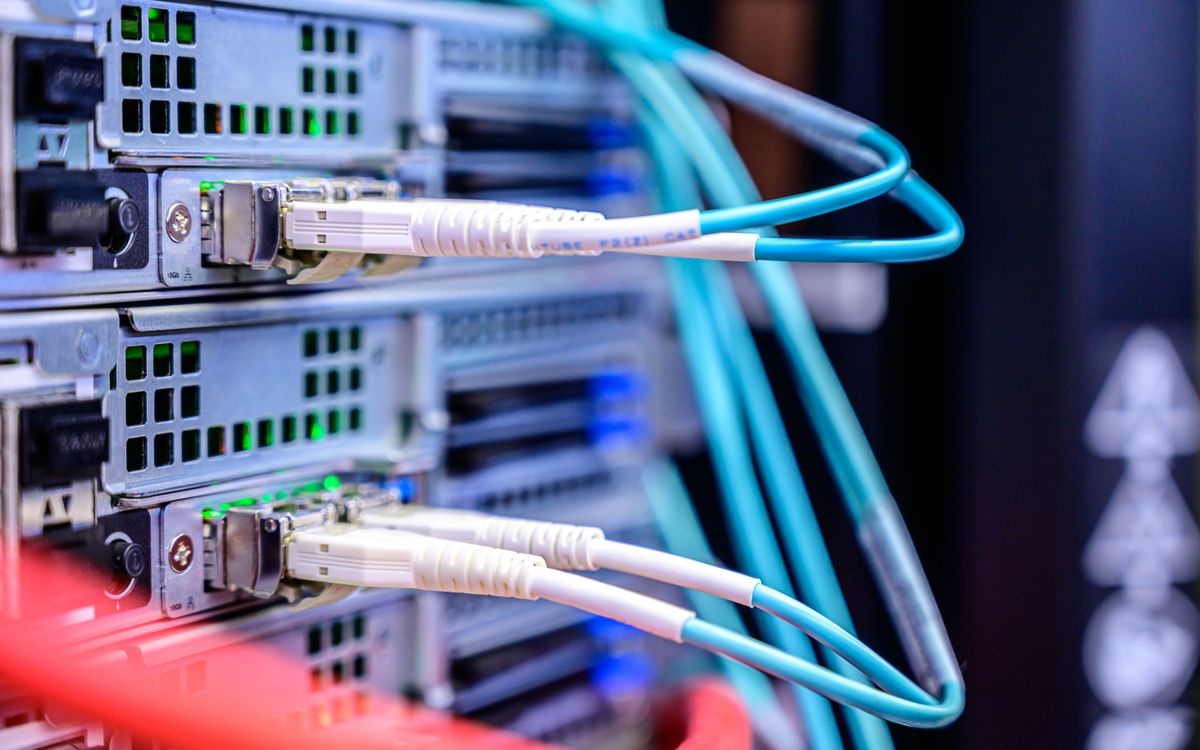
This transition is more than a simple speed upgrade. The leap from 5G to 6G represents a shift in how humans, devices, and even intelligent systems interact. Connectivity is no longer just about streaming faster videos; it’s about enabling entirely new industries, reshaping economies, and connecting people in ways that were once science fiction.
The Promise of 5G
To understand the significance of 6G, it’s worth looking at what 5G has already unlocked. Compared to 4G, 5G offers:
- Gigabit-level speeds that rival wired broadband.
- Latency as low as 1 millisecond, enabling real-time interactions.
- Massive device density, supporting millions of IoT devices per square kilometer.
- Network slicing, allowing carriers to dedicate portions of the network for specific use cases, like healthcare or manufacturing.
These capabilities have enabled practical innovations: remote surgery, smart factories with predictive maintenance, and immersive AR/VR experiences. In short, 5G made the internet not just faster, but more adaptable.
Enter 6G: Beyond Speed
Where 5G focused on connectivity, 6G is expected to focus on convergence. It will merge digital, physical, and biological worlds in ways that redefine interaction. Early research points to features such as:
- Speeds up to 1 Tbps, orders of magnitude faster than 5G.
- Terahertz spectrum usage, allowing ultra-high data transfer with precise localization.
- Integrated sensing and communication, where networks not only transmit data but also perceive environments.
- Native AI integration, making networks capable of self-optimizing and predicting demand.
The vision for 6G includes holographic communications, fully autonomous transportation systems, and seamless integration of human-machine interfaces.
Global Economic Impact
Connectivity is not just a technical matter—it is an economic driver. 5G has already added billions of dollars to global GDP, powering industries like logistics, healthcare, and manufacturing. With 6G, the impact could be even greater.
Imagine entire industrial processes connected in real time, or rural areas gaining access to high-capacity networks that support education, telemedicine, and entrepreneurship. For developing nations, 6G may present opportunities to leapfrog traditional infrastructure challenges, much as mobile phones once bypassed landlines.
At the same time, the geopolitical race for 6G supremacy is intensifying. Nations like China, the U.S., South Korea, and Finland are investing heavily in early research, viewing 6G as a strategic asset on par with space exploration or advanced energy.
Everyday Life in a 6G World
Beyond economics, 6G promises to change daily life. Homes could become fully “aware” environments, adjusting energy, climate, and security dynamically. Immersive mixed reality might become as common as video calls today. Cars, drones, and delivery robots could navigate seamlessly without human oversight, coordinating in real time through ultra-reliable networks.
Even seemingly simple tasks—like being able to transfer large files online instantly without relying on specialized services—could feel trivial in a 6G world. With terabit speeds, sharing vast amounts of data would be as seamless as sending a text message.
Challenges Ahead
The road to 6G is not without obstacles.
- Spectrum management: Operating in terahertz frequencies requires breakthroughs in hardware and regulation.
- Energy consumption: Ultra-fast networks will need sustainable solutions to avoid massive carbon footprints.
- Security and privacy: With networks that integrate AI and sensing, safeguarding data will be more complex than ever.
- Digital divide: Without careful planning, 6G could deepen the gap between connected and unconnected regions.
These challenges highlight the importance of global collaboration. Without it, the benefits of 6G risk being unevenly distributed.
The Timeline to 6G
While 5G is still in the deployment phase, work on 6G is accelerating. Research initiatives like Europe’s Hexa-X and collaborations in Asia aim for early standards by 2028, with commercial deployment likely in the early 2030s.
This overlap between 5G and 6G development reflects the growing pace of innovation. Connectivity has become so critical to global systems that research into the “next big thing” begins even before the current generation has reached maturity.
Conclusion
The evolution from 5G to 6G is not just about faster downloads. It is about redefining how people, devices, and intelligent systems coexist. 5G has laid the groundwork by proving that networks can be flexible, scalable, and integral to daily life. 6G aims to go further—creating networks that sense, think, and integrate seamlessly into human environments.
As with all technology shifts, the global impact will depend not only on technical breakthroughs but also on thoughtful policy, equitable access, and sustainable design. If done right, 6G could unlock a new era of human connectivity—one where the boundaries between physical and digital worlds all but disappear.
← All articles